
St. Martin Parish Sex Offender Checks
The St. Martin Parish Sheriff’s Office registry page is the local entry to OffenderWatch.
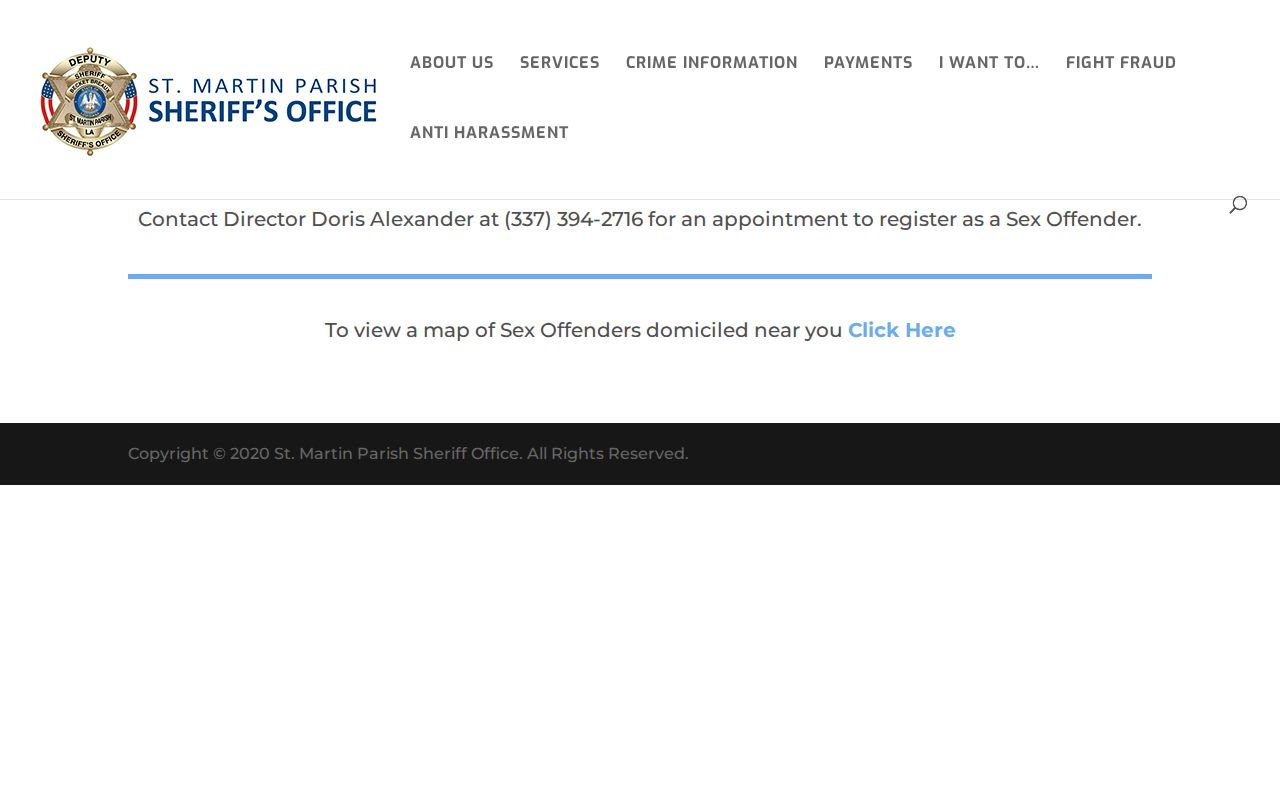
Its parish-centered route is useful for address awareness and local registrations, while the state registry supplies Louisiana’s broader official search.
Begin with a name when checking a known person. For neighborhood awareness, use address, city, ZIP, county/parish, map, or radius tools when the interface offers them. Match more than a name: compare aliases, photograph, age or birth information, physical characteristics, and registered location. A result reflects published registration information at that moment, not every criminal event in the person’s history.
Parish OffenderWatch and State Registry
The sheriff receives local registration and change reports, forwards required data, and participates in verification and enforcement. Louisiana State Police maintains the official statewide registry framework. The Louisiana State Police registry information page explains that statewide role and public-access channel.
Using both routes helps distinguish a parish-filtered view from the state record behind it; neither should be treated as a substitute for direct safety guidance from law enforcement.
Louisiana Sex Offender Registry Searches
The Louisiana Sex Offender and Child Predator Registry supports searches by person and geography. The exact interface can change, so use the labels currently displayed and accept its conditions of use. Search broadly first, then narrow only after confirming that spelling, suffixes, or aliases are not excluding a possible match.
- Open the official Louisiana registry search and acknowledge its use conditions.
- Enter a first and last name, or choose a location search by address, city, ZIP, parish, map, or available radius.
- Review the result list and compare photograph, aliases, physical description, and location rather than relying on the name alone.
- Open the full profile and read the offense, tier, address, employment or school fields if published, compliance status, and verification information.
| Field Label | Type | Required | Notes |
|---|---|---|---|
| Last name | Text | No | Useful for a known person; check aliases and variants. |
| First name | Text | No | Combine with surname to narrow results. |
| Address, city, or ZIP | Text/select | No | Supports place-based community awareness. |
| Parish | Select | No | Choose St. Martin for a parish-filtered result set. |
| Map or radius | Map | No | Use when available to view results around a location. |
| Email alerts | Subscription | No | OffenderWatch may offer address-based notification. |
When a Person Crosses State Lines
The parish and state tools answer Louisiana-centered questions. For a person who may have registered elsewhere, use the U.S. Department of Justice National Sex Offender Public Website.
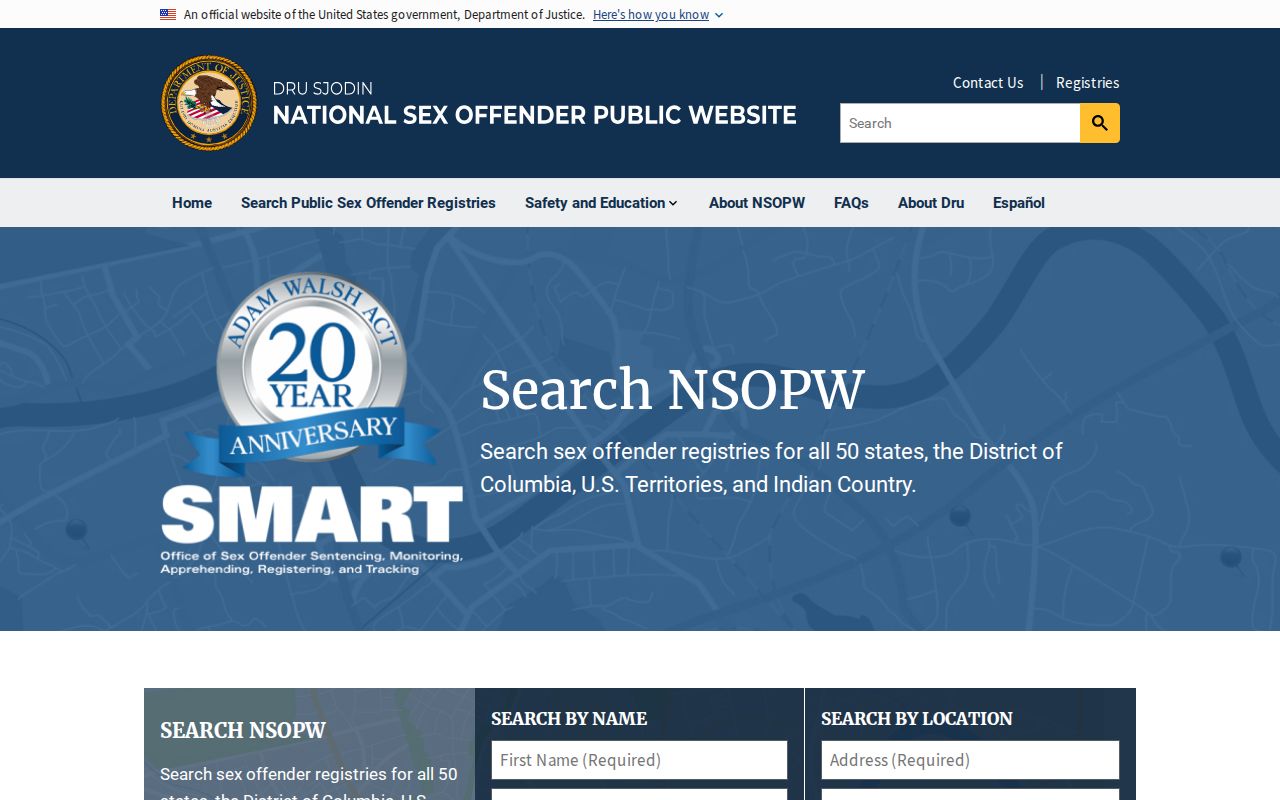
NSOPW federates participating jurisdiction data, so a national result should still be opened and verified at the originating registry. Differences in timing, fields, and public classifications can make state profiles more detailed than a combined result.
A missing national match does not prove that no registration exists. Repeat the search with spelling variants and aliases, check Louisiana directly, and contact the appropriate registry office when identity or current compliance is uncertain.
Registry Profiles: What They Show
A public profile can combine identifiers, location data, the qualifying offense, and registration status. Read the “last updated” or verification material when shown. Workplaces, schools, vehicles, temporary lodging, or travel-related data may appear when reporting and publication rules require them, but the research does not establish that every field appears for every registrant.
| Name & Aliases | Legal name, known aliases, suffixes, and other published identifying names. |
|---|---|
| Photo & Physical Description | Photograph plus sex, race, height, weight, hair, eyes, and identifying marks when published. |
| Registered Address | Residence and other reportable locations; status may distinguish an exact or transient location. |
| Offense & Statute | Qualifying conviction, jurisdiction, statute, and adjudication details provided by the registry. |
| Tier | Louisiana tier classification tied to statutory duration and reporting duties. |
| Registration Status | Compliance, absconded or wanted indicators, and verification or update dates when shown. |
How Registry Updates Reach the Public
Louisiana law places data-forwarding duties on the registering agency. The official text of La. R.S. 15:545 addresses law-enforcement registry responsibilities.
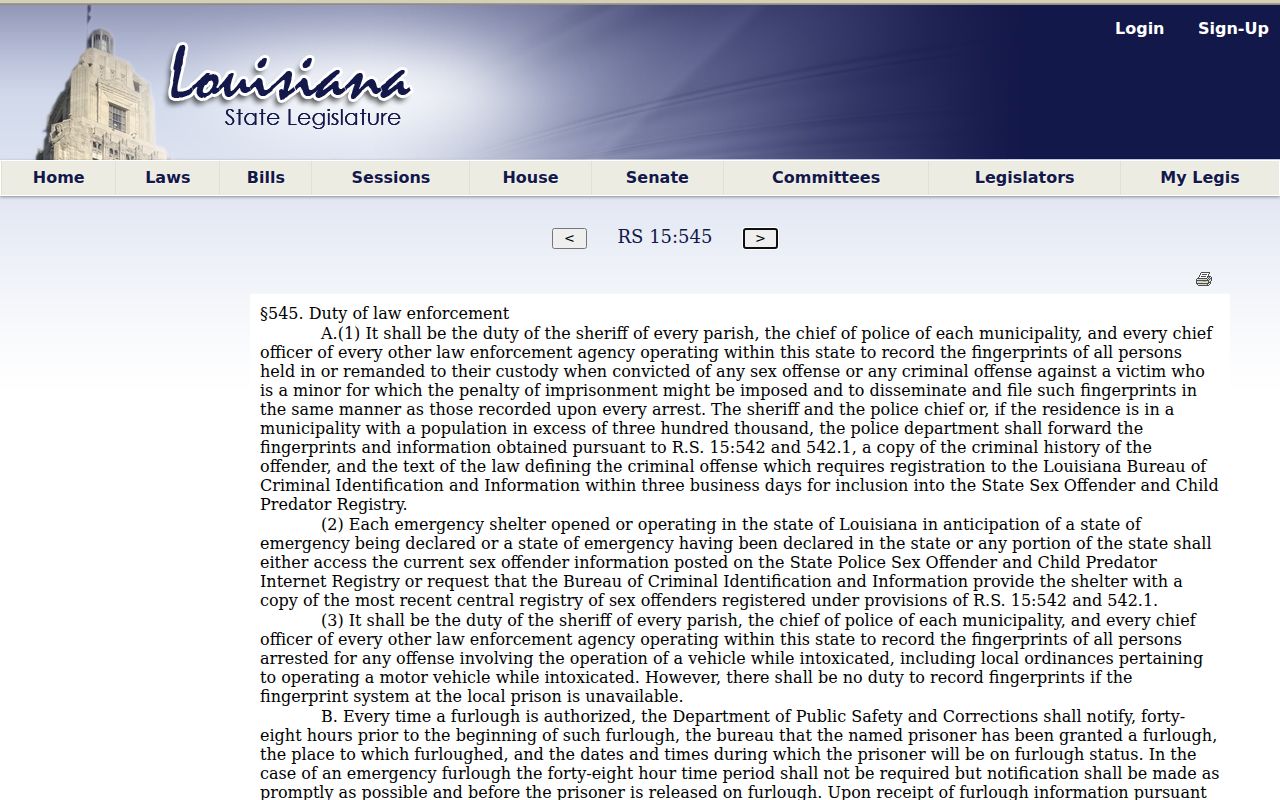
In St. Martin Parish, that flow connects a registrant’s report to the sheriff with the state-operated public system. It also explains why reporting a suspected violation to SMPSO is more appropriate than attempting independent enforcement.
Publication can lag a move, verification, correction, or enforcement action. Save the profile’s identifying details and contact law enforcement if a registered address appears inaccurate or an urgent safety issue exists. Do not assume that an online status tells the whole investigative story.
Registration Levels and Duties in Louisiana
Louisiana uses three tiers. Research identifies baseline periods of 15 years for Tier I, 25 years for Tier II, and life for Tier III, subject to the governing offense, adjudication, later legal events, and statutory recalculation. Verification frequency increases with tier: annual, semiannual, and quarterly. A public label should be read with the underlying statute rather than treated as a risk score.
| Level / Tier | Baseline Duration | Verification Frequency |
|---|---|---|
| Tier I | 15 years | Annually |
| Tier II | 25 years | Every six months |
| Tier III | Lifetime | Every three months |
Registry End Dates Can Change
The Louisiana registration statute supplies the legal framework for registration duties and durations.
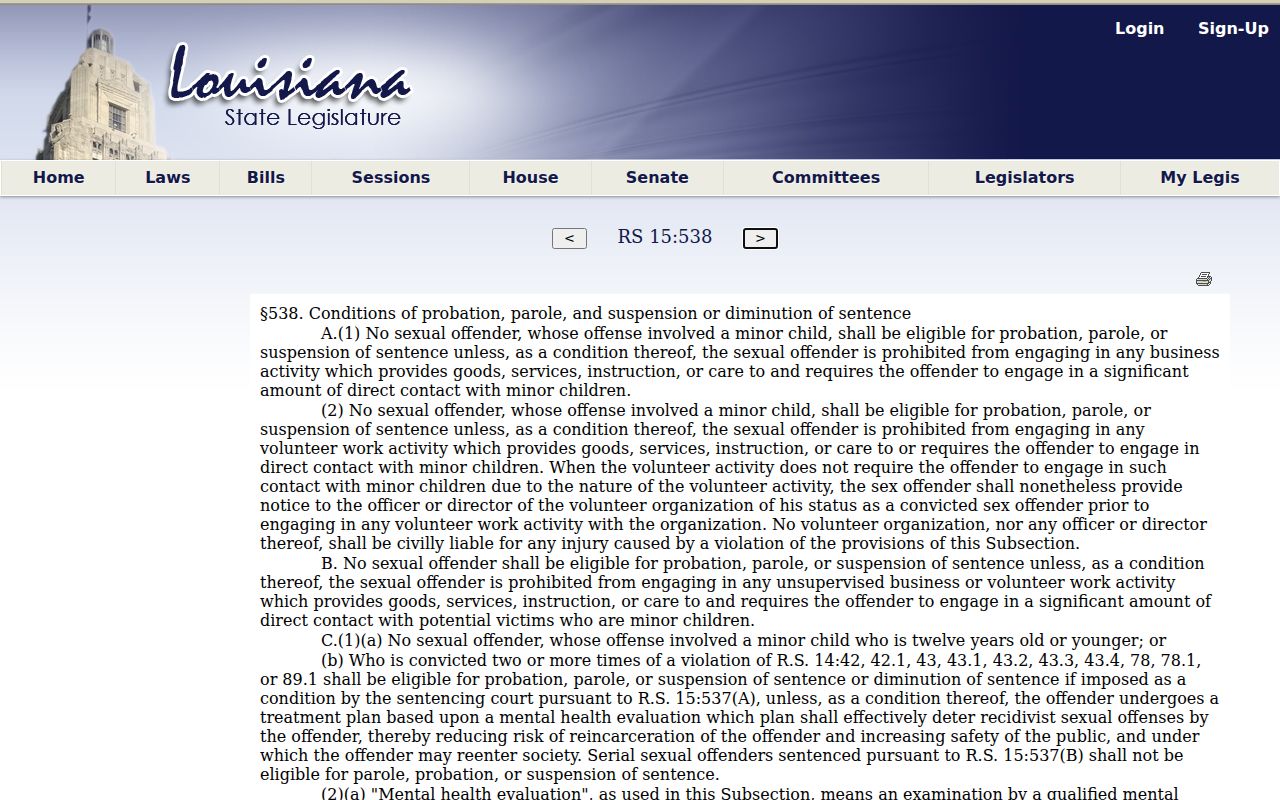
The statutory text is the better authority when a profile summary and an expected end date appear inconsistent.
La. R.S. 15:544.2 permits recalculation of certain registration end dates after qualifying later convictions or interruptions. A person’s expected period can also depend on the offense, release or supervision dates, out-of-state obligations, and statutory exceptions. The public should not calculate a removal date from the tier table alone; questions about an individual obligation belong with Louisiana State Police and the registering agency.
Address Alerts and Community Awareness
OffenderWatch may allow residents to subscribe for notices tied to an address. That feature is useful for changes within a selected area, while a one-time name search is better for identifying a known person. Notification rules also require registrants to provide specified notices, and law enforcement has statutory roles in public dissemination.
Alerts are prompts to review an official profile, not declarations that a new crime occurred. Confirm the distance, address, photograph, and status in the current record. For suspected noncompliance in St. Martin Parish, preserve the official profile details and report the concern to the sheriff rather than posting accusations or contacting the registrant.
What the Registry Cannot Prove
The registry is not a parish-wide list of everyone with a criminal conviction. It includes people with qualifying sex-offense or child-predator registration duties and displays fields authorized for notification. It does not replace the 16th JDC judgment, a Louisiana State Police Right to Review, or an agency incident report.
Likewise, an address marker does not establish that the registrant owns the property, is present at every moment, or committed a new offense. Use registry information for awareness and reasonable safety planning. In an emergency call 911; for a non-emergency registration concern, use the St. Martin Parish Sheriff’s Office channel.
Registry classification is also offense-based under Louisiana law, not a personalized prediction that one listed person presents a particular level of future danger. Read the conviction jurisdiction and statute, because an out-of-state offense may be displayed using terminology different from Louisiana’s. When a field is unclear, the registering agency can explain the public record without disclosing protected investigative material.
Using Registry Information Lawfully
Public availability does not authorize vigilantism. Registry records support informed personal, family, and neighborhood safety decisions, including checking a location and subscribing to available notices. Verify a match through official records and let law enforcement investigate suspected violations.
Use the information responsibly: Do not use registry data to harass, threaten, intimidate, or injure a registrant or anyone in the household. Publication does not authorize discrimination or denial of services except where law specifically permits it; misuse can result in criminal or civil consequences.