
Arrest Records in St. Martin Parish
St. Martin Parish arrest records begin with the agency that acted. The St. Martin Parish Sheriff creates reports for sheriff incidents. Breaux Bridge Police, St. Martinville Police, Parks Police, Louisiana State Police Troop I, Wildlife and Fisheries Enforcement, and state Probation and Parole keep records from their own enforcement work. The sheriff is not a clearinghouse for every city report. If a city officer made the arrest, ask that police department for the incident narrative and ask the jail separately for its booking record.
An arrest can produce an officer narrative, a jail entry, fingerprints sent into Louisiana’s state system, a bond record, and later a clerk file. These records appear at different times. The jail may list allegations before the district attorney decides what to file. A person may also be released before a name search is made. For those reasons, an arrest search is a trail across custodians, not one permanent parishwide list.
Start With St. Martin Inmates
The sheriff’s Main Offices and Corrections page is the official starting point for the current inmate tool.
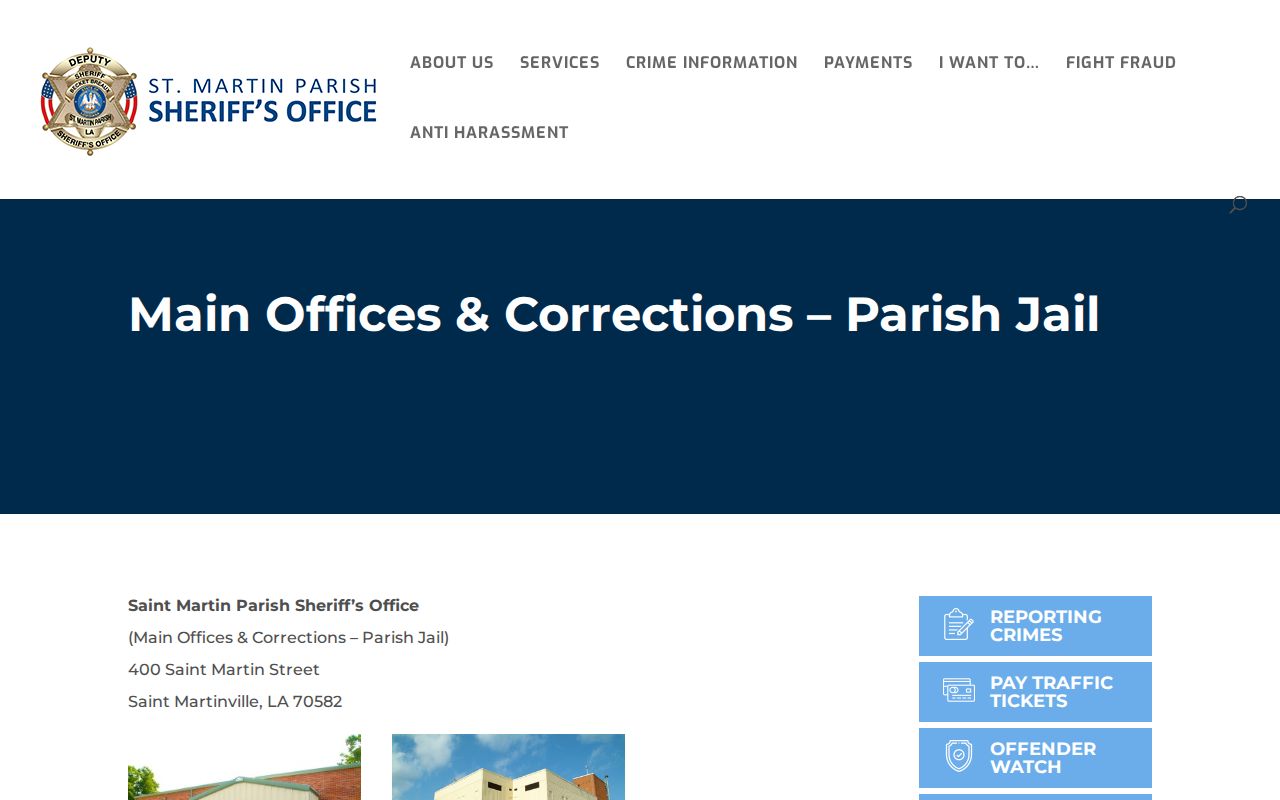
The linked roster is custody-centered. Search the exact name first, then try a spelling variant. A missing result may mean release, transfer, delayed posting, or a name mismatch. It does not establish that no arrest occurred. Call Corrections with the full name and an approximate booking time when the live tool does not resolve the search.
St. Martin Parish Arrest Lookups
Use the channels in the order that matches the event. Save the booking number, arresting agency, date, and alleged charge whenever they appear. Those details help distinguish people with similar names and connect the booking to a later case.
- Search the sheriff’s current inmate interface and confirm whether the person is still at the parish jail.
- Request the arrest or incident report from the agency that made the arrest, not merely the booking agency.
- Search St. Martin Parish court cases or contact the clerk to learn whether the district attorney filed charges.
- For your own statewide record, schedule fingerprints through Louisiana Applicant Processing System and request Louisiana State Police Right to Review.
- When online tools omit needed detail, send a focused Louisiana Public Records Law request to the proper custodian.
Municipal citations and bench matters may stay in city court. Federal custody belongs in federal systems. Always match the court, jail, and agency to the event rather than assuming the sheriff owns every part.
Request the St. Martin Arrest Report
A useful request names the record, not “all criminal history.” Give the event or incident number if known, the subject’s full name, the date and time range, location, arresting unit, and preferred format. Ask for a cost estimate before copies are made. Electronic delivery may be available, but current submission routes and fees should be confirmed with the agency.
The SMPSO Jail and Corrections hub separates correctional services from police-report material.
This split matters. Jail staff can confirm intake, bond, custody, and release fields, while the arresting agency holds the probable-cause narrative. Active-investigation facts, confidential sources, security methods, juvenile material, victim data, medical information, and protected identifiers may be withheld or redacted under Louisiana law. A denial should state its legal basis.
Arrest Records: What They Contain
A public St. Martin booking profile commonly gives enough data to identify the arrest cycle, but it does not promise the officer’s evidence or the final outcome. Compare dates and identifiers before deciding that two entries concern the same person.
| Booking Number | The jail’s identifier for that intake event. |
|---|---|
| Booking Date & Time | When the person was received, which may differ from arrest time. |
| Arresting Agency | The sheriff, city police, state police, or another unit that delivered the arrest. |
| Charges | Allegations supplied at booking; prosecutors may amend or decline them. |
| Bond | Amount, type, or hold information entered after judicial review. |
| Mugshot Policy | A booking photograph may appear if enabled, but it is not proof of guilt. |
| Release Status | Current custody, release, or transfer information when posted. |
Officer narratives, evidence details, medical flags, housing assignments, and complete court dispositions are not guaranteed public roster fields. Obtain a specific report or filed judgment for those distinct questions.
St. Martin Incarceration Letters
After a person leaves the roster, an incarceration letter can document a past period in the parish jail. The sheriff’s Letter of Incarceration page provides the civilian request form and asks for the relevant date or date range.
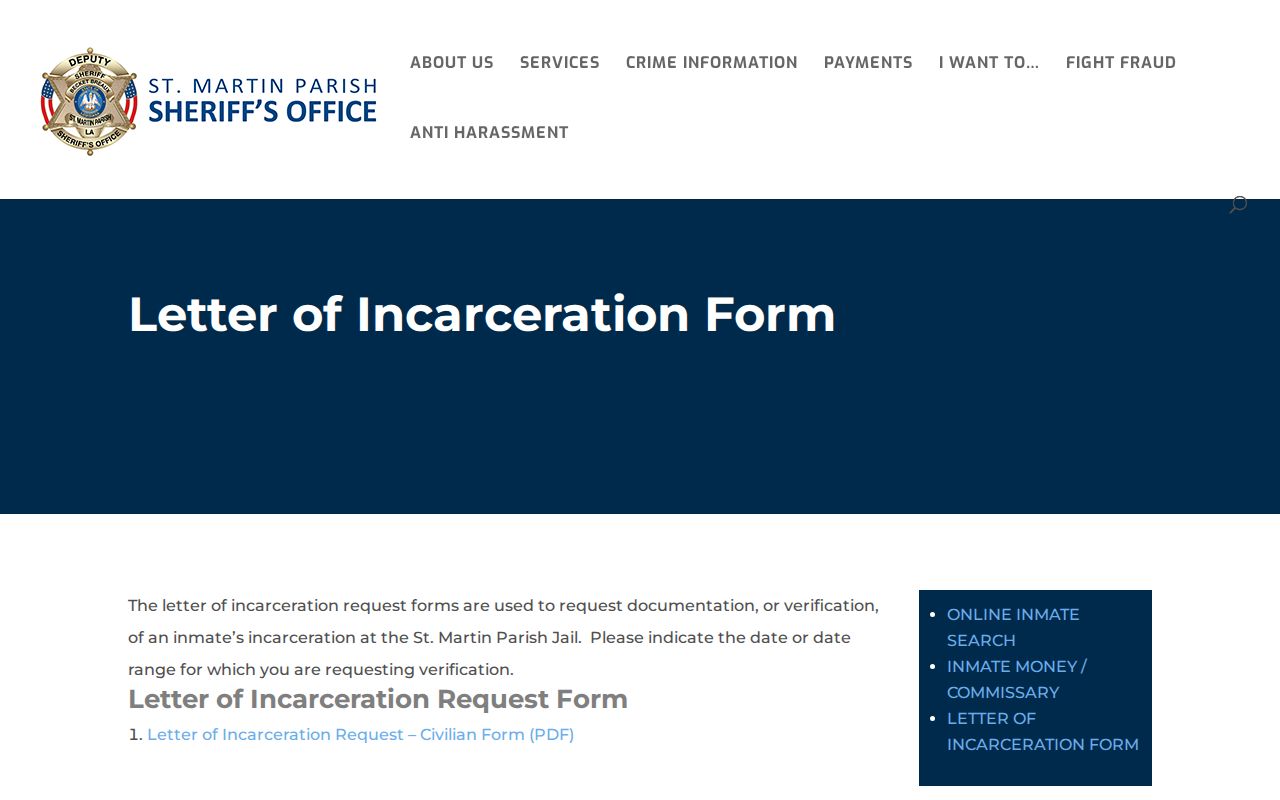
The letter is narrower than an arrest report. It can verify confinement without seeking the entire booking file or incident narrative. Use the confined person’s full legal name, prior name if relevant, the requested dates, and reliable contact details. Inspect the current form for signature and delivery fields. No official fee was located in the captured research, so ask before submission rather than assuming the letter is free.
Recent St. Martin Parish Bookings
The sheriff’s inmate interface is best used as a live custody tool. It may display a name, booking number and date, arresting agency, charge description, bond, status, and photograph. It is not described as a complete historic arrest log, and no fixed update interval was confirmed. Recent intake can take time to appear while identity, authority, warrants, and medical and security screening are processed.
Entries can vanish from a current roster after release or transfer. Call the jail when timing is critical. For an older confinement period, use the incarceration-letter route or request booking data. For a recent city arrest, also confirm which facility accepted the person. A city officer’s report and the parish jail entry remain separate records even when they concern the same event.
Track St. Martin Custody Transfers
A sentenced person transferred from the parish jail may next appear in the Louisiana DPS&C Imprisoned Person Locator. VINELink adds custody status and notification options; it is not a certified criminal history. The Louisiana VINELink service is a practical follow-up when a local roster entry no longer appears.

Search with strong identifiers and verify any result with the holding agency. A transfer gap does not show acquittal or dismissal. It only shows that the current-custody source changed. The clerk’s judgment is still the best public record of the court outcome.
Federal custody is separate again. The Federal Bureau of Prisons inmate locator covers people in federal BOP custody.
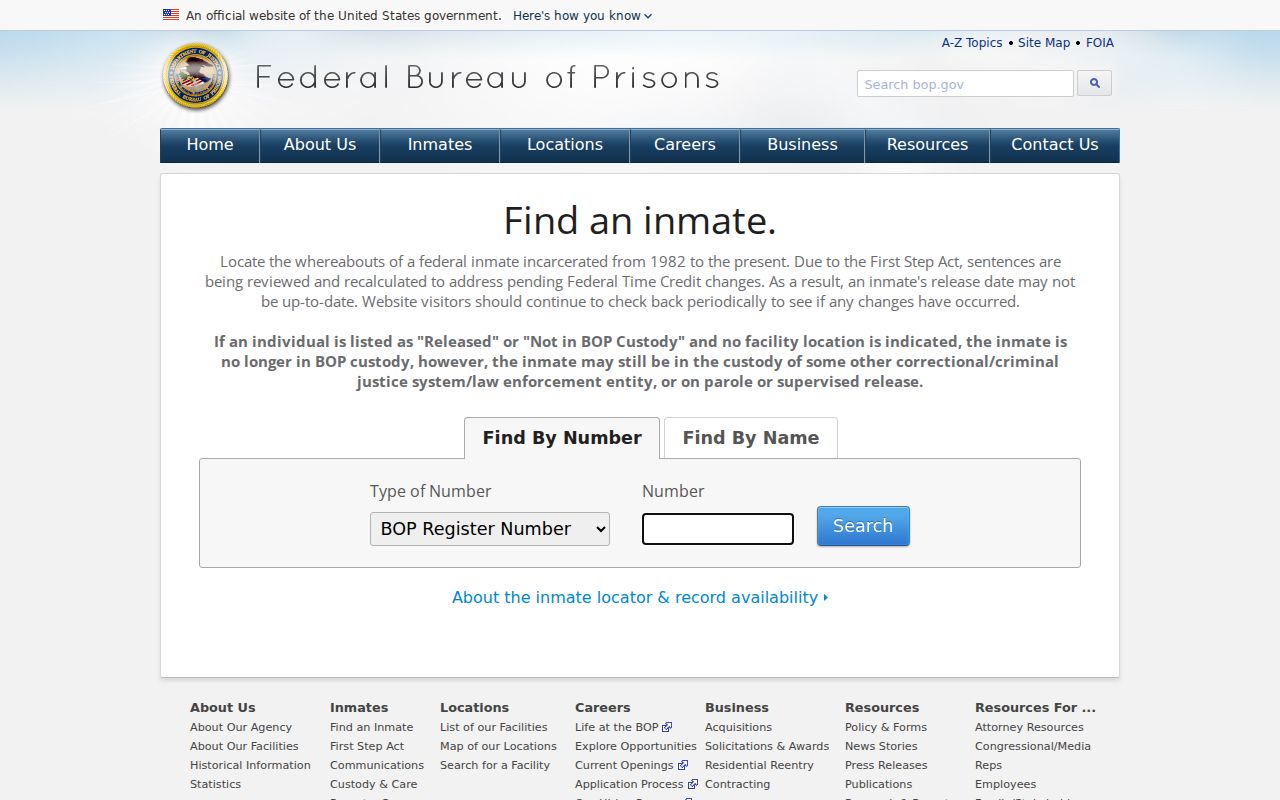
That locator does not search the St. Martin Parish jail or Louisiana prisons. Federal docket questions belong in PACER and the Western District of Louisiana, while local booking questions stay with SMPSO.
St. Martin Warrants and Capiases
No complete official public parishwide warrant database was confirmed. A capias is a court order directing an arrest, often tied to a missed appearance or another court order. Contact SMPSO for sheriff-held information, the 16th JDC clerk for case-linked capias entries, and the relevant municipal court for city bench warrants. The inmate list cannot answer whether a person who is not jailed has an active warrant.
Ask for the issuing court, docket number, charge, bond or hold terms, and current confirmation. Search warrants and sealed arrest warrants are generally unavailable before execution. A person seeking to resolve their own suspected warrant should consult the issuing court or counsel before appearing. Never try to detain someone based on an online claim.
A warrant arrest can create the same multi-record chain as any other arrest. The court retains the capias, the officer’s agency records execution, and the jail records intake if confinement follows. Bond terms may come from judicial review after booking. Match the warrant number or court docket to the booking date rather than treating a charge label as a unique identifier.
Arrest Records vs Conviction Records
An arrest record proves an enforcement or intake event, not guilt. The district attorney may file a different charge, decline prosecution, or dismiss a filed matter. Read the clerk’s minutes, judgment, or order rather than treating the original booking allegation as the result.
| Arrest Record | Conviction Record |
|---|---|
| Created by the arresting agency and, at intake, the jail. | Created through the court and recorded by the clerk. |
| Shows that an arrest or booking occurred. | Shows guilt established by plea or verdict. |
| Lives in agency reports and the jail system. | Lives in the clerk file and reported state history. |
| May end in release, no filing, dismissal, or acquittal. | May lead to sentence, appeal, or qualifying expungement. |
Note: A St. Martin Parish arrest is an allegation. Verify the disposition through the court before relying on it.