
Criminal Court Cases in St. Martin Parish
The 16th Judicial District Court hears St. Martin Parish felonies, district-level misdemeanors, criminal motions, and expungement proceedings. The St. Martin Parish Clerk of Court is the custodian of its docket, minutes, pleadings, judgments, and certified copies. A district file commonly identifies the State v. defendant caption, docket number, filing date, division or judge, charging instrument, counsel, event dates, plea, judgment, and sentence.
Jurisdiction matters. Breaux Bridge and St. Martinville municipal courts handle city-ordinance, traffic, fine, and locally assigned matters; Parks uses its municipal channel as constituted. A city citation or bench warrant may therefore be absent from a district-only search. Start with the court named on the citation, bond paper, or notice, and expand to the district clerk when the charge was accepted for district prosecution.
Booking Charge Versus Filed Charge
A sheriff booking record captures the allegations delivered to the jail at intake. It is not the final charging decision. The district attorney may decline a count, amend its statute, file a bill of information, or seek a grand-jury indictment. The court file is the better source for what prosecutors actually pursued and what the judge ultimately ordered.
Match name, booking date, arresting agency, and charge across both records. A spelling variation or unmatched disposition can make the trail appear incomplete. “Nolle prosequi” means the prosecutor ended that prosecution; “dismissed” means the count ended without conviction; “acquitted” follows a not-guilty verdict. None of those terms, by itself, means the original booking was erased.
St. Martin Parish Case Record Searches
The clerk’s official site is the local starting point, but the research did not confirm a complete public remote index or its historical cutoff. Treat online results as an index rather than proof of absence. For an older or unindexed file, contact the clerk for manual research and ask whether inspection, an ordinary copy, or a certified copy fits the need.
- Identify whether the matter belongs to the 16th JDC or a municipal court.
- Search or contact the custodian with the party’s full name and a useful date range, or supply the exact case number.
- Confirm the division, filing year, and criminal case type before opening a similarly named result.
- Read the charging instrument, chronological docket, minute entries, disposition, judgment, and sentence together.
- Request a certified document from the clerk when authenticity matters; confirm current fees and delivery options directly.
| Field Label | Type | Required | Notes |
|---|---|---|---|
| Last name | Text | No | Use the legal surname and check spelling variants. |
| First name | Text | No | Add a middle name or initial to separate similar parties. |
| Case number | Text | No | The strongest route to one known docket. |
| Date of birth | Date | No | May help distinguish people; full DOB may be restricted. |
| Case type or year | Select/filter | No | Narrows broad name results and identifies the court term. |
Older St. Martin Files Beyond the Index
The St. Martin Parish Clerk of Court remains the source when a local remote search produces nothing. Give the clerk a full name, approximate filing or arrest year, case type, and any known docket number. Ask whether the file is archived, whether a public terminal or manual search is required, and whether requested pages can be mailed or collected.
Do not infer “no case” from one blank search. Older paper material may not be fully indexed, a municipal case may be held elsewhere, or a name may have been entered differently. The clerk can also explain whether a copy is informational or certified; current copy, certification, research, and delivery charges should be confirmed before ordering.
What a Criminal Case File Contains
The useful record is usually a group of documents rather than one status line. The instrument states what was formally charged; the docket gives the chronological index; minutes record courtroom events; and the judgment and sentence establish the result. Grand-jury deliberations themselves remain secret even when an indictment enters the public case file.
| Case Number & Court | Identifies the docket, jurisdiction, division, and often the assigned judge. |
|---|---|
| Charging Document | Complaint, bill of information, or indictment stating the filed accusation. |
| Docket Entries | Chronological filings, minute events, motions, settings, and court action. |
| Hearing Dates | Past events and scheduled arraignments, motions, trials, or sentencing. |
| Disposition & Judgment | Plea, dismissal, nolle prosequi, acquittal, conviction, or other count-level outcome. |
| Sentence & Conditions | Custody, probation, fines, costs, restitution, and concurrent or consecutive terms. |
Finding the Judgment, Not “Disposed”
A summary label such as “disposed” says only that the docket is no longer pending. It does not identify which counts survived, whether the offense changed, or what sentence followed. Open the minute entry and signed judgment, then compare each count against the original instrument. If probation was imposed, court minutes show the judicial term even though operational supervision files are not the same as open court records.
For a personal rap-sheet mismatch, compare the certified disposition with a Louisiana State Police Right to Review. A local judgment can exist while the fingerprint-linked Louisiana Computerized Criminal History record still lacks the matched outcome. Correction begins with the originating clerk and reporting agency, using identifiers and certified papers rather than relying on a web summary.
Criminal Case Stages in St. Martin Parish
The typical sequence is arrest and first appearance, district-attorney screening, a bill of information or grand-jury indictment, arraignment, discovery and pretrial motions, plea or trial, judgment and sentence, then any appeal or post-conviction proceeding. Not every arrest reaches every stage, and the research does not establish a fixed local timetable. Filing dates and minutes are the reliable case-specific chronology.
Case flow: Arrest › First appearance › DA screening › Information or indictment › Arraignment › Motions › Plea or trial › Judgment › Sentencing › Appeal
Federal Cases Use a Different Docket
Federal criminal matters are not filed in the parish clerk’s 16th JDC docket. St. Martin Parish is within the U.S. District Court for the Western District of Louisiana. The court’s official site explains its divisions and clerk services.
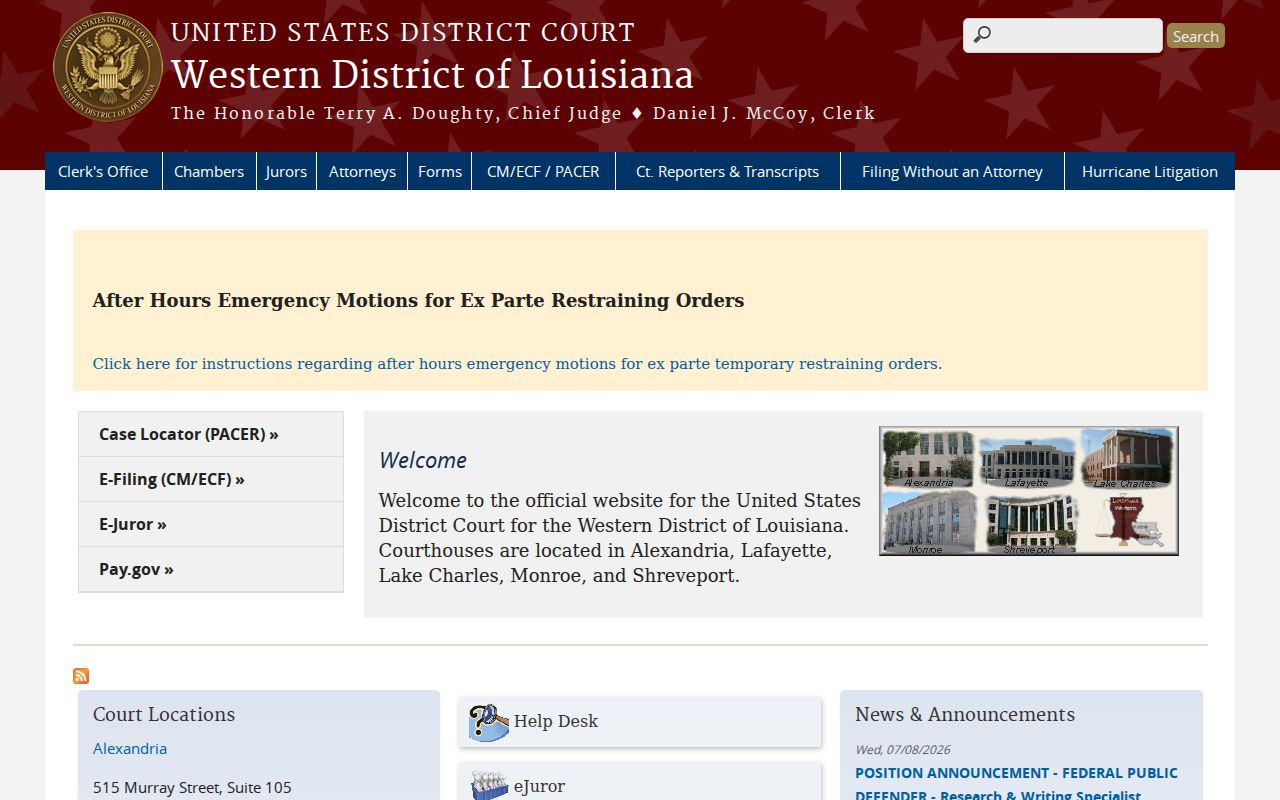
That separate federal jurisdiction is why a parish search cannot establish that no federal case exists.
Federal docket searches and documents are available through PACER, which requires its own account and may charge usage fees.
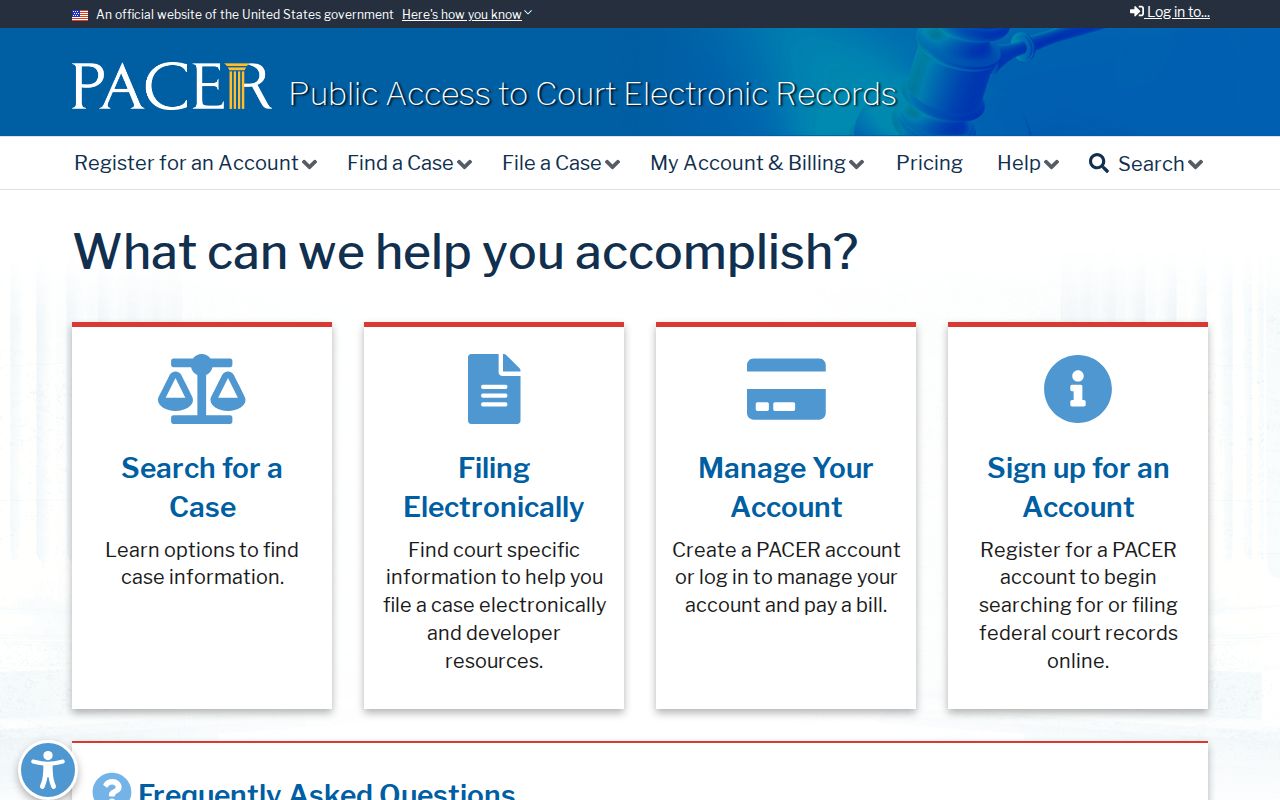
Search PACER by party or case number, confirm the Western District docket, and read the federal charging and judgment documents rather than mixing them with parish records.
Appeals Leave the Parish File
An appeal or supervisory writ from the 16th JDC creates records in Louisiana’s appellate system. The parish docket may show that review was sought, but the appellate court’s opinion, order, and docket are maintained through Louisiana judiciary channels. Use the lower-court case number, party names, and appeal number when available to connect the two records.
This distinction matters when a trial-court judgment was affirmed, reversed, or remanded. Read the appellate mandate and then return to the parish docket for later action. A stale trial-court summary may not, by itself, show the full procedural result.
Post-conviction applications can add another layer after direct review. Note the date and title of each filing instead of assuming every later entry is an appeal. If an order references a separate appellate number, use that number at the reviewing court and retain the parish number for the trial-level record.
Access Rules for Case Records
Louisiana Public Records Law begins with the definition of a public record and custodian in La. R.S. 44:1.
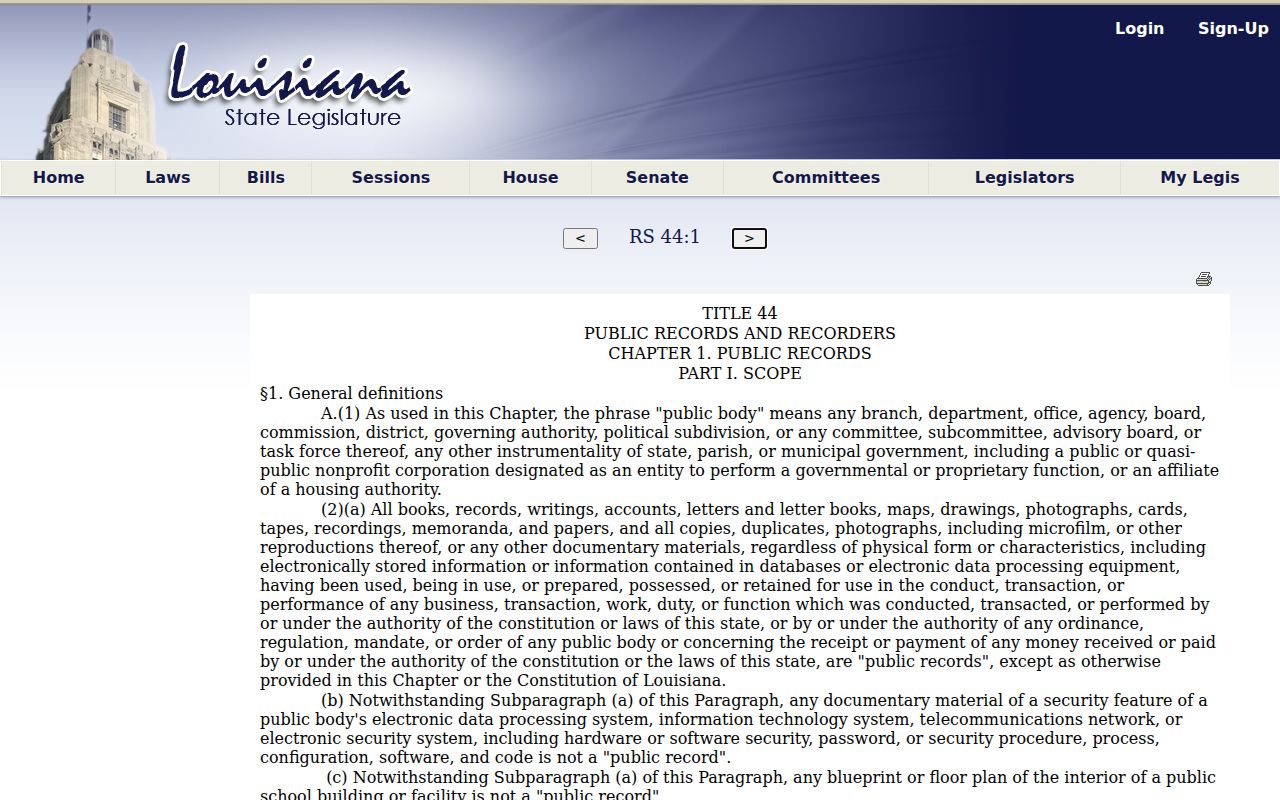
That framework supports inspection of many filed judicial records, but it does not make every identifier or every law-enforcement page public.
The law-enforcement records exemption in La. R.S. 44:3 permits defined investigative material to be withheld.
Juvenile matters, victim and minor identifiers, Social Security numbers, full birth dates, sealed filings, and Article 973 expunged records may be restricted or redacted. A public remainder can exist even when sensitive portions do not. When a case is missing, ask the clerk whether it is municipal, archived, sealed, expunged, or entered under another spelling; do not ask staff to disclose material the law protects.